


Meteorologist vs Weather Specialist, what's the difference?

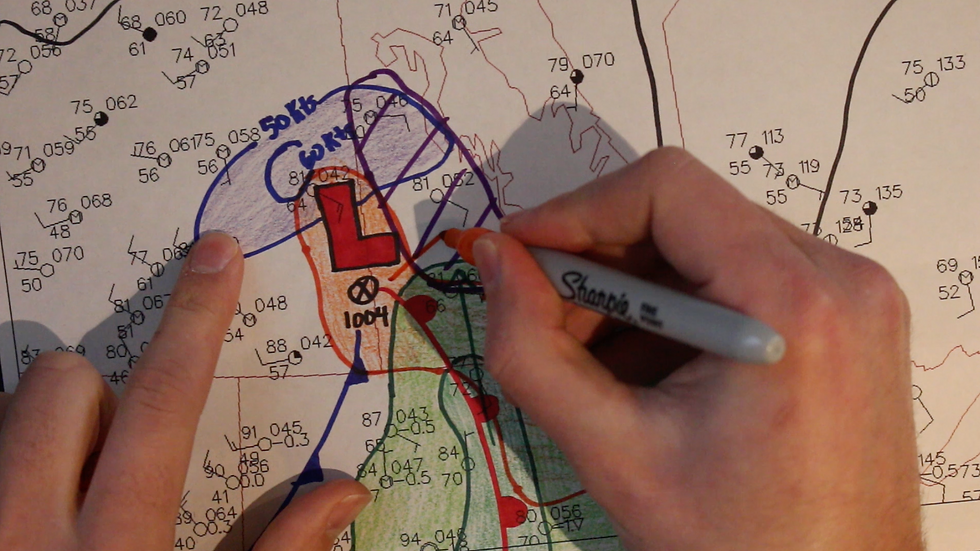
There has been a growing amount of individuals calling themselves 'Weather Specialists' and while the professional use of the term 'Meteorologist' has been defined, Weather Specialist remains vague. The purpose of this post is to identify the differences (if any) between the two professional titles and to shed light on guidelines for using each one.
The following definitions are taken from the AMS Glossary of Meteorology (2026):
Weather Forecaster: "a person who predicts the weather".
Weather Specialist: no official definition exists other than for military use.
Meteorologist: "An individual with specialized education who uses scientific principles to explain, understand, observe, or forecast Earth’s atmospheric phenomena and/or how the atmosphere affects Earth and life on the planet. This specialized education is in the form of a bachelor’s or higher degree in meteorology or atmospheric science. There are some cases where an individual has not obtained such a degree but has met related educational requirements and has at least several years of professional experience in meteorology".
Meteorologists
The American Meteorological Society (AMS) has clearly defined who can call themselves meteorologist, and this is widely accepted by the World Meteorological Organization (WMO). Therefore, most countries (like Canada) have adopted the AMS definition of what a meteorologist is and the requirements needed for this title.
The description we saw above for the use of the term meteorologist is based on AMS' professional guidelines adopted in 2012. Some people fall outside that category however: "there are cases where an individual has not obtained a degree in meteorology or atmospheric science but has gained sufficient knowledge through coursework and/or professional experience to successfully fill professional positions, such as military weather forecasters or positions typically held by degreed meteorologists. These individuals can also be referred to as meteorologists. This includes individuals who have obtained and maintain either the AMS Radio or Television Seal of Approval or the AMS Certified Broadcast Meteorologist designation" (AMS, 2026).
As we can see, the term meteorologist is usually tied with minimum of an undergraduate degree in meteorology or atmospheric sciences and/or professional experience as a meteorologist. Although this term is defined, it is not regulated nor enforced. Unlike other professional designations (for example 'Engineer'), there is no committee analyzing each individuals and giving them a professional designation, nor are their penalties for individuals using the title wrongly. AMS and CMOS have certification programs to help combat this, but generally speaking, as long as you fit the professional guidelines defined above, you can call yourself a meteorologist.
The last part of the AMS statement is important: "Individuals who have little formal education in the atmospheric sciences, and who disseminate weather information and forecasts prepared by others, are properly designated weathercasters".
Weather Forecaster (or weathercaster)
This brings us to weather forecasters or weathercasters. As the AMS defined it, a weather forecaster is someone who predicts the weather. This generic term is fairly broad, but it seems to be appropriate for individuals who have little formal education in the atmospheric sciences, and who disseminate weather information and forecasts prepared by others (AMS, 2026). Therefore, most social media 'weather pages' would fall in this category, unless they are actual meteorologists.
In this category, anyone can be a weather forecaster, it has no professional guidelines for use. Therefore, anyone can have the title 'Weather Forecaster'. Still, this title isn't as widely used as weather specialist. Arguably, most storm chasers are weather forecasters, but most prefer to call themselves storm chasers over weather forecaster, since forecasting the weather is implied in storm chasing.
Weather Specialist
This brings us to our 'Weather Specialists'. There are no formal definitions of what that is, but it sounds cool and it sounds like you know what you are doing. Based on the information I have been able to find, a weather specialist seems to be the intermediate between a 'Weather Forecaster' and a 'Meteorologist' whereas you don't fit the professional guidelines to call yourself a meteorologist, but you think you have more experience than a weather forecaster. This experience could have been acquired in several ways:
a formal (university/college) course(s) without obtaining a degree;
informal setting (such as online courses COMET Ed being a common example) or
experience over time of several years of self-thought weather forecasting.
I've seen the term used on TV by people presenting the weather. This seems logically. Perhaps the individual is in the midst of getting their broadcasting or meteorology degree, working on getting their professional designation or are doing an internship with the station. I've seen this term being used mostly in the private sector with a fast rise on social media weather pages. The term implies you specialize in weather, but what does that mean? Well, by definition, meteorologists use their formal training to try and predict the weather. Therefore, a weather specialist shouldn't be predicting the weather but instead explaining it.
Essentially, Weather Specialists are weather communicators. They are taking predictions from training meteorologists and translating it into simple terminology for the general public to ingest.

Military Weather Specialists
The closest thing to official descriptions of 'Weather Specialists' comes from military professions.
Tactical Weather Specialist (Canadian Armed Forces): "The Weather Observer is employed as part of the Meteorological Section within the Intelligence Flight. The primary responsibilities are to observe and record surface weather conditions; process, analyze and interpret meteorological information; operate and maintain specialized meteorological instruments and equipment; brief wing personnel on actual and expected weather conditions; and disseminate forecasted weather conditions" (CAF, 2024). Please note that a Tactical Weather Specialist is the designation received after passing trade course. The profession within the CAF is called a Meteorological Technician, which are present in the army, navy and air force.
Weather Specialist (U.S. Air Force): "Analyze weather conditions, prepare forecasts, issue weather warnings and brief weather information to pilots. Observe, record and transmit space environment observations. Read and interpret weather satellite imagery, climatology reports, computerized weather prediction models and Doppler weather radar imagery. Understand war fighter tactics and its relationship to weather conditions" (U.S. Air Force, 2026).
Therefore, I would stay away from using this terminology to avoid confusion.
Potential Issues
Excluding the aforementioned military professions, since weather forecasters and weather specialists have no formal education or training in meteorology, they are not tied to the same ethical or professional standards that meteorologists are. This is where the spread of misinformation can occur, especially when weather specialists have large social media followings. This is a growing trend and is fast-becoming one of the main sources of online 'weather misinformation'.
While these individuals may mean well, the public will not be able to make the distinction between a trained meteorologist, a weather forecaster and weather specialists and will put them all in the same bag. We are coming close to a precipice where official definitions of the term 'Weather Specialist' may become necessary for the private sector.
Conclusion
To recap the list of titles:
Meteorologist: use if you have formal education or training.
Weather Forecaster: anyone predicting the weather can use this.
Weather Specialist: if military trained, currently getting formal education or doing an internship, use this. Otherwise, try to stay away from it.
Simply put, be careful what information you are ingesting from 'Weather Specialists' as this title is not regulated or officially defined, unless they have formal training from the military (as we saw above). Your go-to trusted source of weather information should always be from professional meteorologists. Anyone with decision-making authority should get their information from those trusted sources, especially for severe weather, which require a strong background in theoretical concepts. Organizations and conference organizers should be careful when having guest speakers with no formal training, risking spread of misinformation on topics such as weather, climate and forecasting, which could cause mistrust in your organization moving forward.
Trusted Sites for Weather Information In Canada
Summer Thunderstorm Outlooks: CLICK HERE
Significant Weather Outlooks: CLICK HERE
Warnings/Watches: CLICK HERE
Significant Weather Discussion for Prairies: CLICK HERE
Emergency Preparedness Toolkit: CLICK HERE


Comments